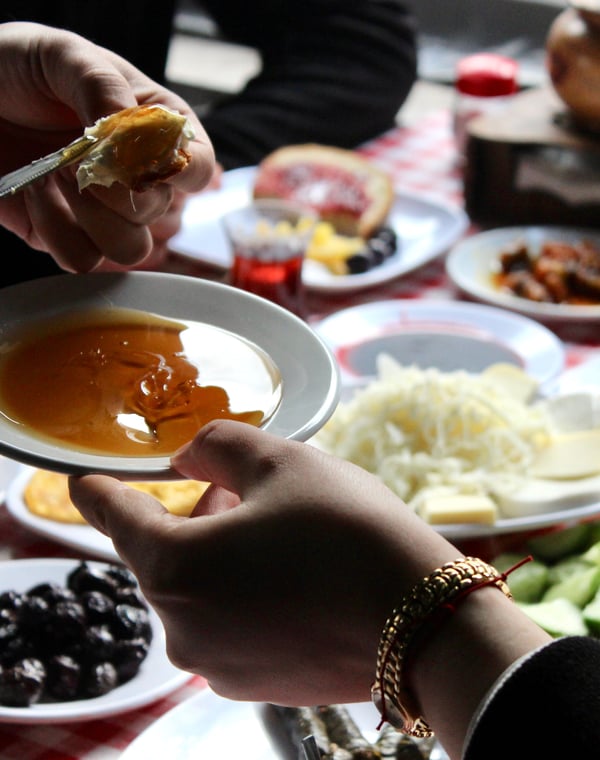
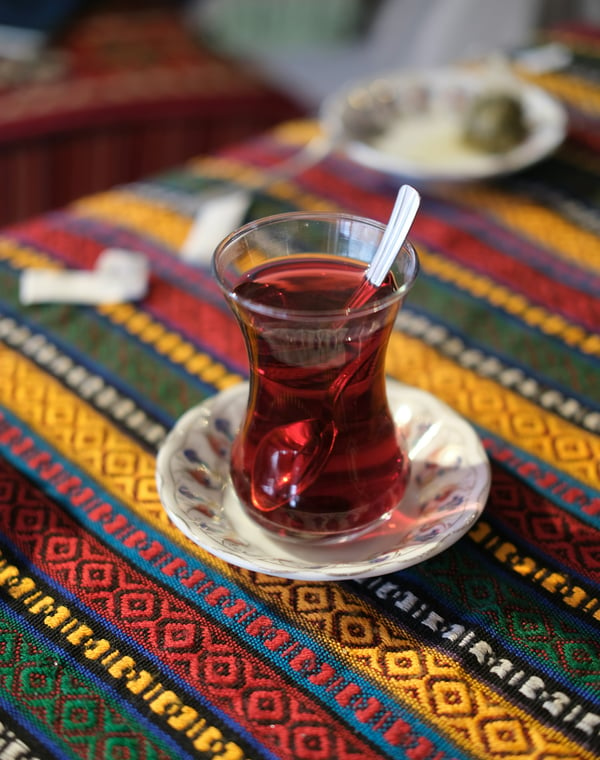
Some of the best eating in Turkey happens on the street — from sesame bread rings sold by sidewalk carts to grilled fish sandwiches by the water and late-night stuffed mussels. Turkish street food is cheap, delicious, and (at busy stalls) perfectly safe, and thanks to the weak lira, a street-food feast costs Americans almost nothing. Here's what to look for and how to eat like a local.
The everyday classics
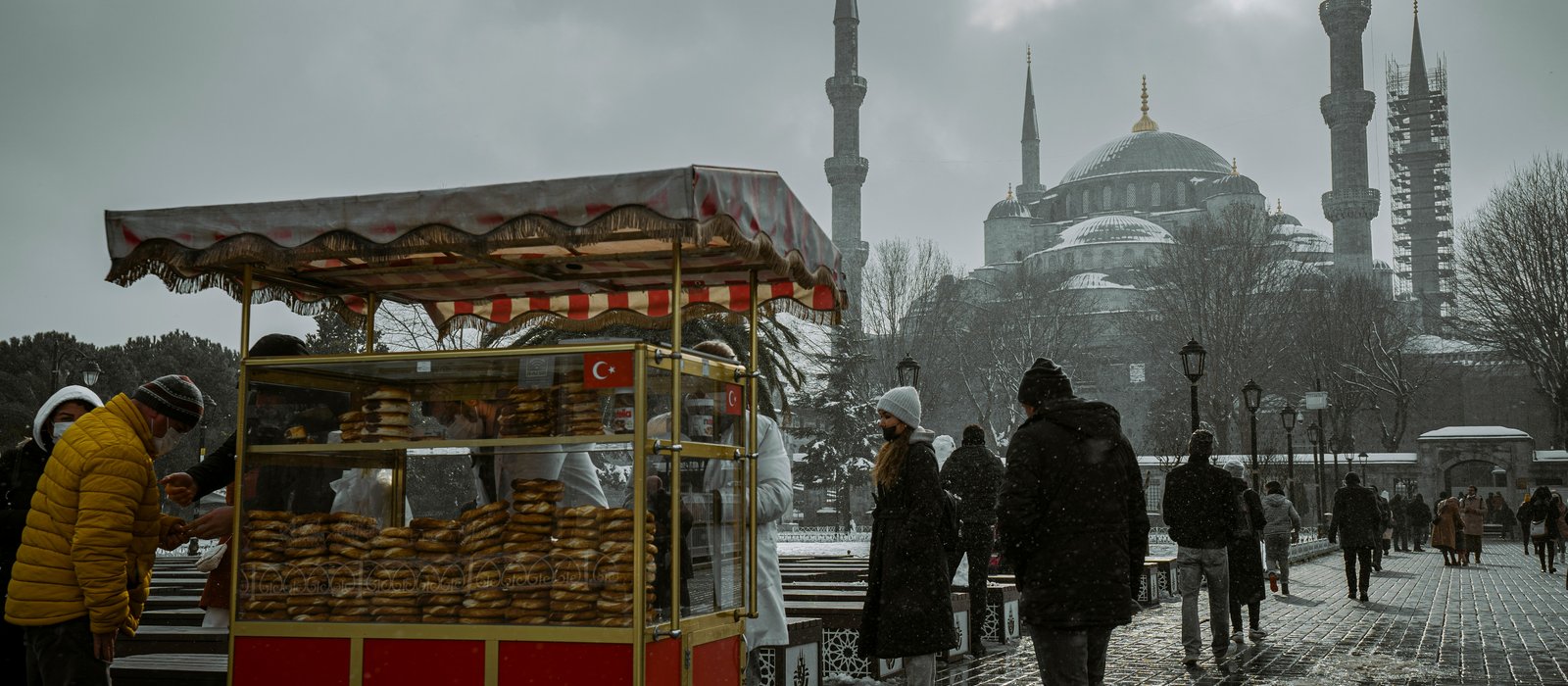
Simit — the sesame-crusted bread ring sold everywhere from red carts, Turkey's answer to a bagel, perfect with tea for breakfast or a snack.
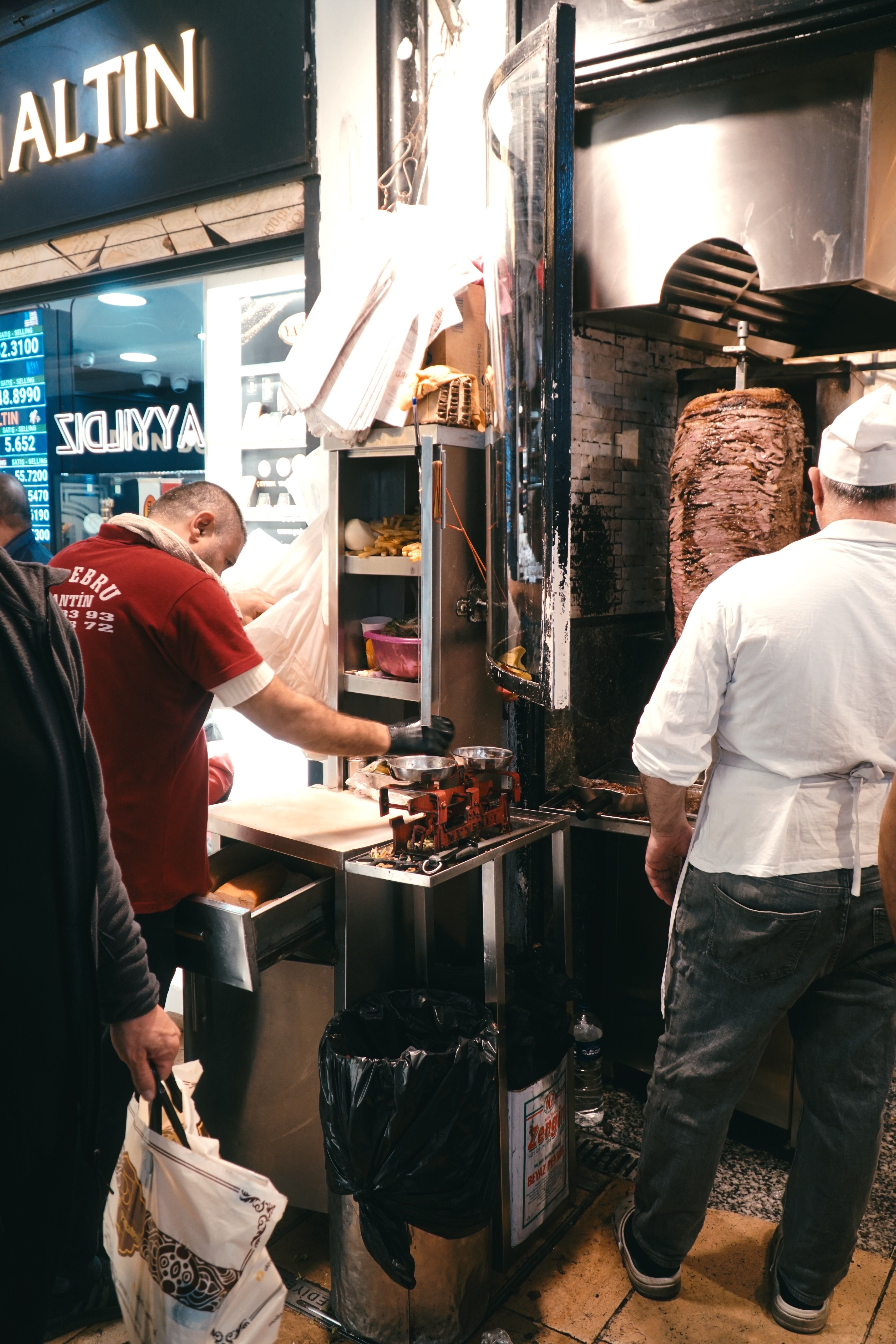
Döner — spit-roasted meat shaved into a wrap (dürüm), sandwich, or plate; the original of the kebab the world copied.
Lahmacun — thin crisp flatbread topped with spiced minced meat, rolled up with herbs and a squeeze of lemon; cheap and fantastic.
Gözleme — hand-rolled savory flatbread filled with cheese, spinach, or potato, griddled on a domed plate, often by women at markets.
By the water
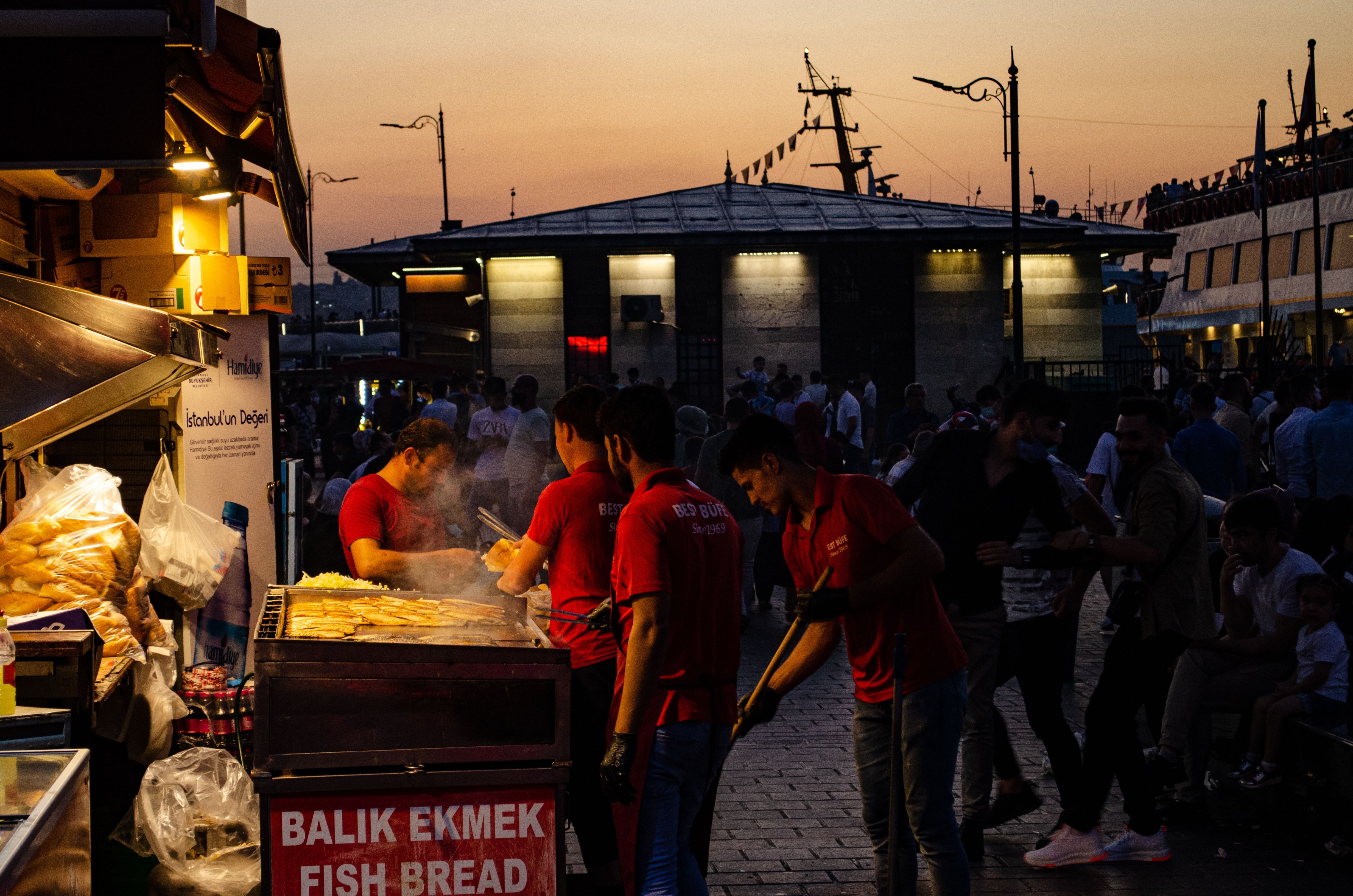
Coastal and Istanbul street food has its own stars. Balık ekmek — a grilled fish fillet stuffed into bread with onions and greens — is the iconic Istanbul waterfront eat, classic by the Galata Bridge in Eminönü. Midye dolma (mussels stuffed with spiced rice, eaten with a squeeze of lemon) are sold from trays especially in the evenings — you eat as many as you like and the seller counts the shells. Kokoreç (seasoned grilled offal in bread) is a beloved, adventurous late-night option.
Sweet and snacky
Street sweets are everywhere. Dondurma — the famously stretchy, chewy Turkish ice cream — comes with a showman vendor who'll tease you with the cone before handing it over. Kestane (roasted chestnuts) and mısır (grilled or boiled corn) are sold from carts, especially in cooler months. And no street snack is complete without a glass of çay (tea) or a cup of fresh pomegranate or orange juice from a corner juicer.
How to eat street food smartly
A few simple tips. Follow the crowds — busy stalls mean fresh, high-turnover food and are your best bet for both quality and safety. Carry small cash, as street vendors rarely take cards and it speeds things up. Stick to bottled water and you'll avoid most stomach trouble. Don't be shy about pointing and trying — vendors are used to curious travelers, and the language barrier melts away over food. And pace yourself: the joy of Turkish street food is grazing your way through a city, a few bites at a time, rather than one big meal.
Regional street snacks
Street food shifts as you move around the country, so keep an eye out for local specialties. In the southeast, çiğ köfte — originally raw spiced bulgur, now usually sold meat-free from dedicated shops, wrapped in flatbread with greens and pomegranate sauce — is a beloved cheap bite. Coastal towns sell the freshest balık ekmek and grilled corn by the water. In winter, carts of roasted chestnuts and boiled corn appear on city streets, while summer brings fresh fruit and juice vendors. Bakeries everywhere sell poğaça and açma (soft savory and sweet rolls) and freshly baked börek by the slice — a perfect cheap breakfast on the move.
Where to graze
The best street-food hunting grounds are the markets and busy pedestrian streets of any Turkish city. In Istanbul, the Eminönü waterfront (balık ekmek), the streets around the Spice Bazaar, İstiklal Street in Beyoğlu, and the Kadıköy market on the Asian side are all superb. Coastal towns have their own waterfront stalls, and every local market (pazar) is a street-food destination in its own right. See our broader Turkish food guide for the full picture.
Why street food is the real Turkey
If you want to understand Turkey, eat where Turks eat — and much of that is on the street. Street food is democratic and everywhere: office workers grabbing a simit, families sharing midye dolma on an evening stroll, students fueling up on döner between classes. It's also where regional identity and centuries of tradition show up most vividly and cheaply. For American travelers, the low prices (a few of these snacks add up to almost nothing) mean you can sample widely without commitment — a bite here, a taste there — and in doing so you'll see the country at street level, which is exactly where Turkey is at its most welcoming and alive.
FAQ
What is the most popular street food in Turkey?
Simit (sesame bread rings) and döner are everyday staples, while balık ekmek (grilled fish sandwiches) is the iconic Istanbul waterfront eat.
Is Turkish street food safe?
Generally yes — busy, high-turnover stalls serve fresh food. Stick to bottled water and follow the crowds for the safest, best options.
What is midye dolma?
Mussels stuffed with spiced rice, eaten with a squeeze of lemon and sold from trays, especially in the evenings. You eat as many as you like and the seller counts the shells.
Where's the best street food in Istanbul?
The Eminönü waterfront, the streets near the Spice Bazaar, İstiklal Street, and the Kadıköy market on the Asian side.
Keep planning
Not sure how it all fits together?
Pick your trip length and we'll point you to the right day-by-day itinerary.