Turkish cuisine is one of the world's great food traditions — a delicious crossroads of Mediterranean, Middle Eastern, and Central Asian flavors built on superb produce, grilled meats, fresh herbs, and olive oil. For American travelers, eating your way through Turkey is one of the trip's biggest pleasures, and thanks to the weak lira, it's astonishingly affordable. Here are the essential dishes to seek out.
Kebabs and grilled meats
Turkey's grilled meats go far beyond the American idea of a kebab:
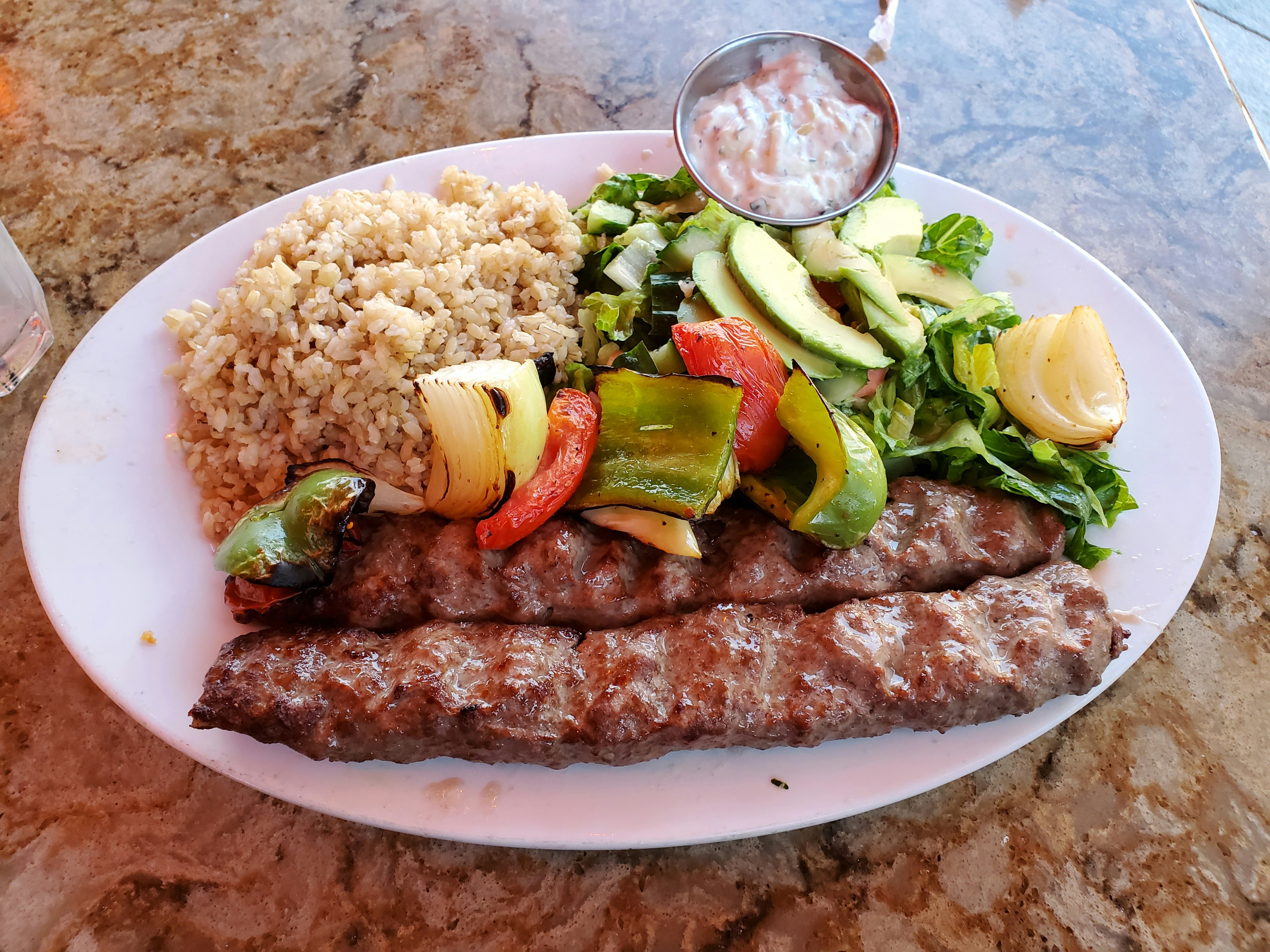
Adana & Urfa kebab — hand-minced spiced lamb grilled on wide skewers (Adana spicy, Urfa mild).
Şiş kebab — cubes of marinated lamb or chicken on a skewer.
Döner — the famous vertical rotisserie meat, sliced into wraps or plates.
Köfte — Turkish meatballs, grilled or in sauce, in countless regional styles.
İskender kebab — döner over bread with tomato sauce and yogurt, a Bursa specialty.
Testi kebab — a Cappadocia specialty slow-cooked and cracked open in a clay pot.
Meze and small plates
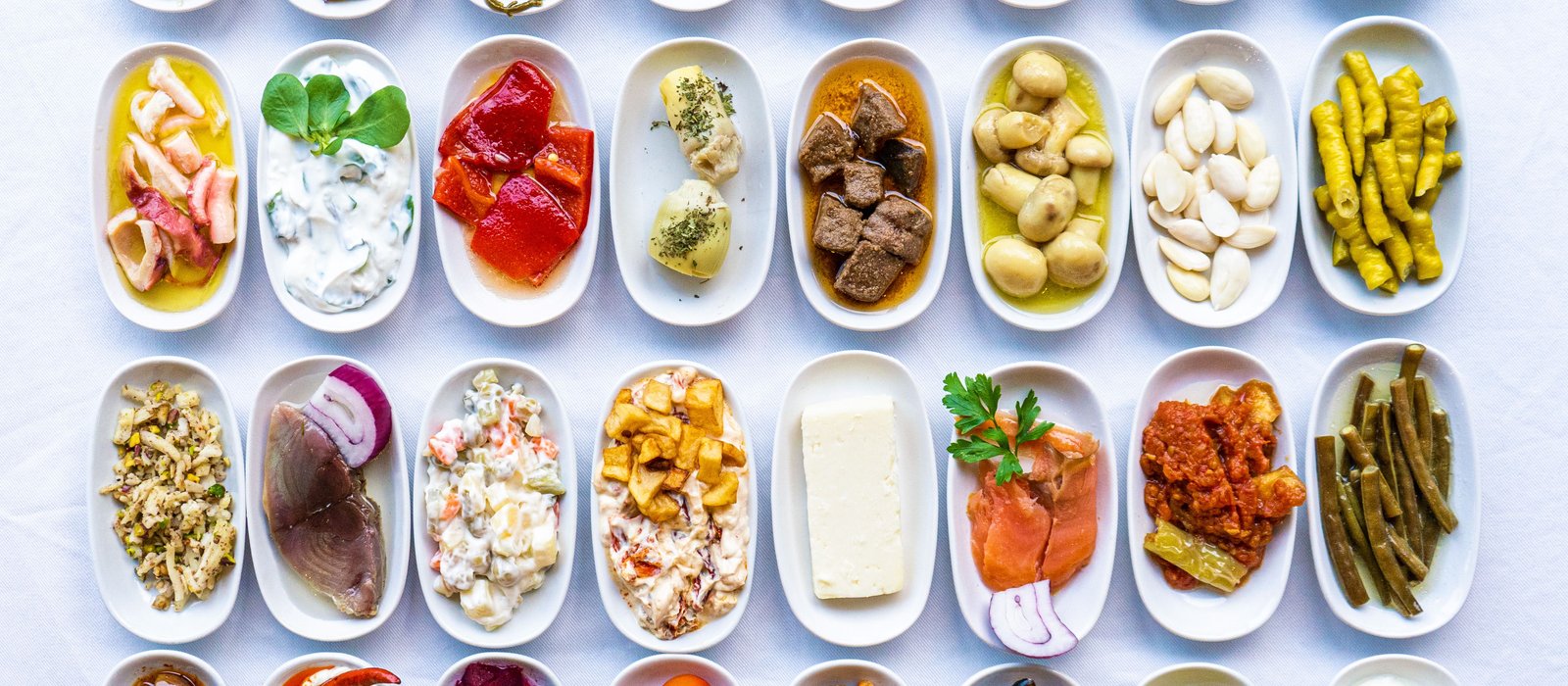
A Turkish meal often starts with meze — a spread of small cold and hot dishes meant for sharing, especially at a meyhane with rakı. Look for haydari (thick herbed yogurt), ezme (spicy tomato-pepper salad), dolma (stuffed grape leaves), sigara böreği (cheese-filled fried pastry rolls), fava (broad bean puree), and patlıcan dishes built on smoky eggplant.
Turkish breakfast and street food
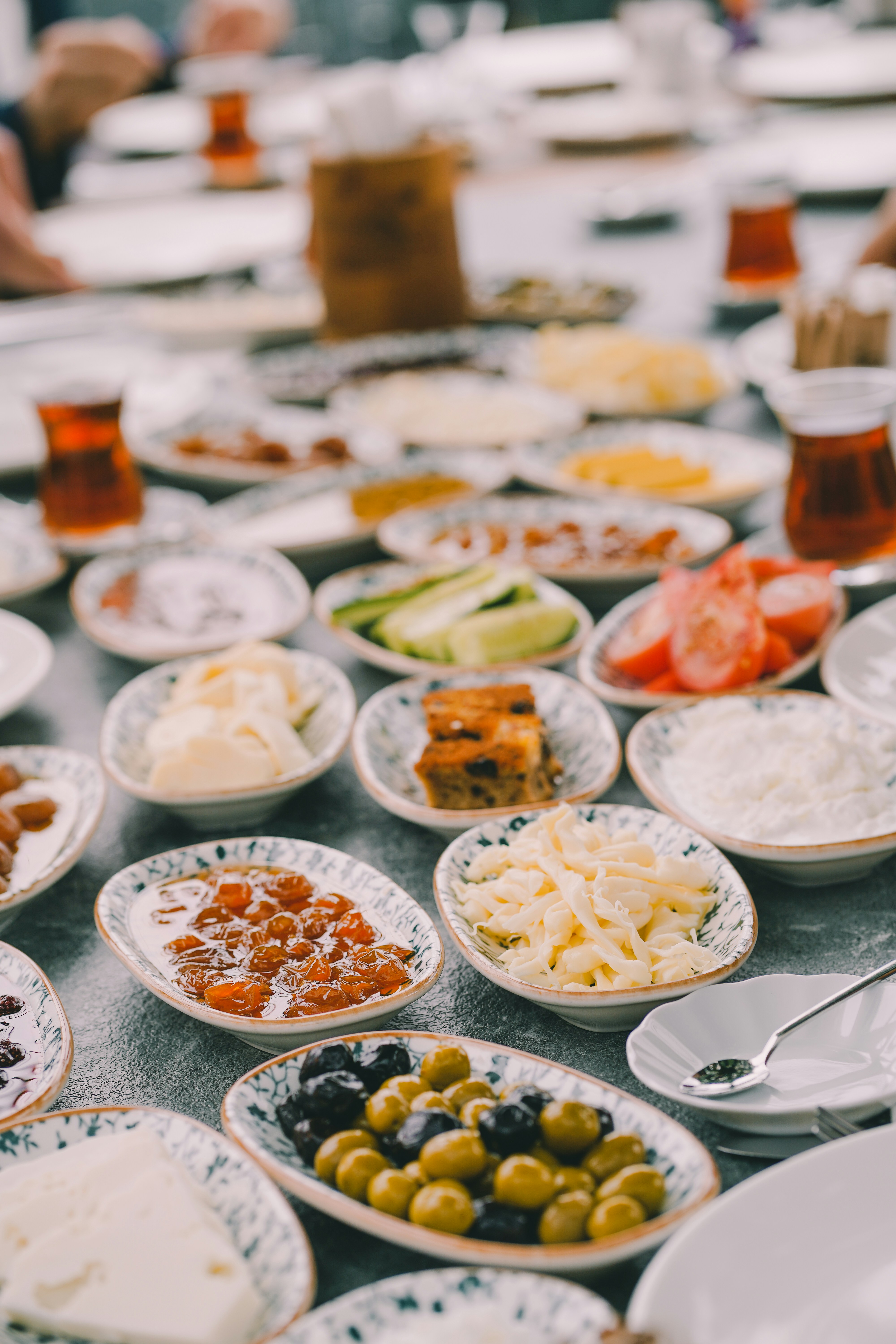
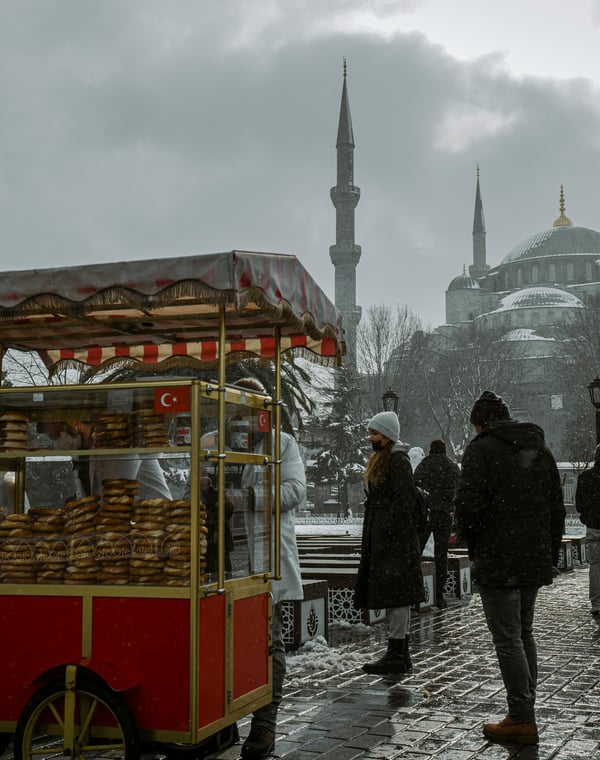
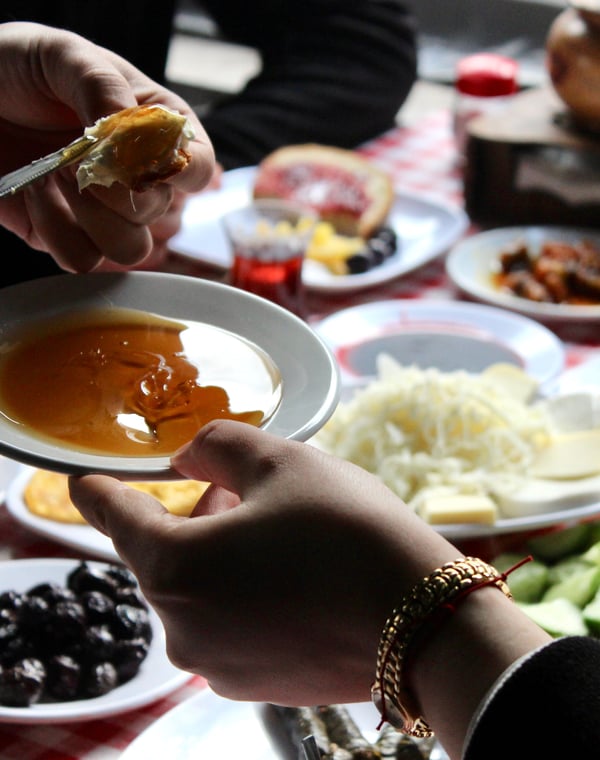
The legendary Turkish breakfast (kahvaltı) is a feast of cheeses, olives, tomatoes, cucumbers, eggs (try menemen, soft scrambled eggs with peppers and tomato), honey, jams, and endless tea — easily replacing lunch. On the street, don't miss simit (sesame bread rings), balık ekmek (grilled fish sandwiches), midye dolma (stuffed mussels), gözleme (savory stuffed flatbread), and lahmacun (thin "Turkish pizza" with spiced mince). Our street food guide has more.
Mains, pastries, and sweets
Beyond the grill, seek out manıtı (tiny dumplings in garlicky yogurt), pide (boat-shaped Turkish flatbread "pizza"), and börek (layered savory pastry). Save room for the sweets: baklava (layered filo with nuts and syrup, finest from Gaziantep), künefe (warm shredded pastry with melting cheese), lokum (Turkish delight), sütlaç (rice pudding), and dondurma (the stretchy Turkish ice cream). For drinks, the trio to know is çay (tea), Turkish coffee, and rakı (the anise spirit) — see our drinks guide.
Regional specialties worth chasing
Turkish food changes dramatically as you travel, and chasing regional specialties is one of the trip's joys. Gaziantep in the southeast is a UNESCO City of Gastronomy, famous for the country's finest baklava and pistachio everything. Cappadocia has its clay-pot testi kebab. The Aegean coast eats lighter and greener, built on olive oil, wild herbs, and seafood. The Black Sea region loves anchovies (hamsi) and corn bread, while Bursa claims the İskender kebab and Adana its namesake spicy kebab. Even Turkish breakfast varies by region — the sprawling "serpme" spread of the southeast is a meal unto itself. Wherever you are, ask what's local; the answer is usually delicious and tied to a place's identity.
A note on portions and pacing
Turkish dining is generous and unhurried. A meyhane dinner can stretch over hours as meze plates keep arriving; a kahvaltı breakfast can defeat the hungriest traveler. Don't try to order everything at once — start with a few meze and add as you go. Bread comes free and constant. And leave room for tea and sweets, which round off nearly every meal. Eating in Turkey is as much about the lingering and the company as the food itself.
Tips for eating in Turkey
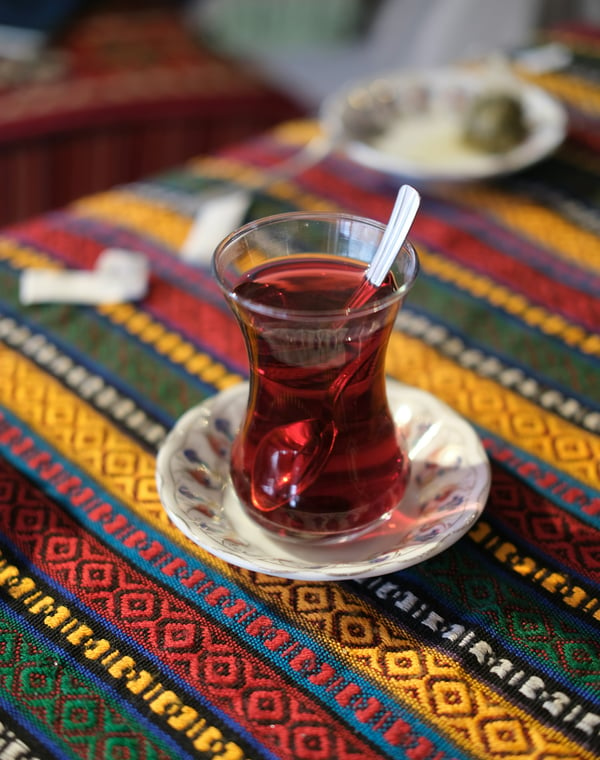
A few pointers: a lokanta (casual eatery with ready-made dishes shown at a counter) is great for cheap, authentic lunches; a meyhane is the place for a long meze-and-rakı dinner; and street stalls are safe, delicious, and cheap. Vegetarians do well thanks to the wealth of meze and vegetable dishes (see our vegetarian guide). And accept the tea that's offered everywhere — it's the heart of Turkish hospitality.
Eating well on any budget
One of the joys of Turkish food is how well you can eat at every price point. At the bottom, street food and a lokanta lunch cost almost nothing and are genuinely excellent. In the middle, a neighborhood meyhane or kebab house delivers a memorable feast for a modest sum. And at the top, Istanbul's fine-dining scene — modern Anatolian cooking, Bosphorus seafood palaces — rivals any world city at a fraction of the price, thanks to the weak lira. You never need to spend much to eat brilliantly in Turkey, which means you can graze your way through markets one day and splurge on a special dinner the next without breaking the budget.
FAQ
What food is Turkey famous for?
Kebabs and grilled meats, meze spreads, Turkish breakfast, street foods like simit and balık ekmek, and sweets like baklava and Turkish delight.
What is a must-try dish in Turkey?
A proper meze-and-rakı dinner at a meyhane, a real Turkish breakfast, and regional specialties like Cappadocia's testi kebab and Gaziantep's baklava.
Is Turkish food good for vegetarians?
Yes — the abundance of meze, vegetable dishes, and pastries makes Turkey very vegetarian-friendly. See our dedicated vegetarian guide.
Is street food safe to eat in Turkey?
Generally yes — busy stalls with high turnover are safe and delicious. Stick to bottled water and you'll be fine.
Keep planning
Not sure how it all fits together?
Pick your trip length and we'll point you to the right day-by-day itinerary.