Good news for plant-based travelers: Turkey is surprisingly vegetarian-friendly. While the country is famous for its kebabs, Turkish cuisine is also built on a deep tradition of vegetable dishes, meze, legumes, and dairy — so vegetarians eat very well, and even vegans can navigate it with a little knowledge. Here's how to thrive meat-free in Turkey.
Why Turkey works for vegetarians
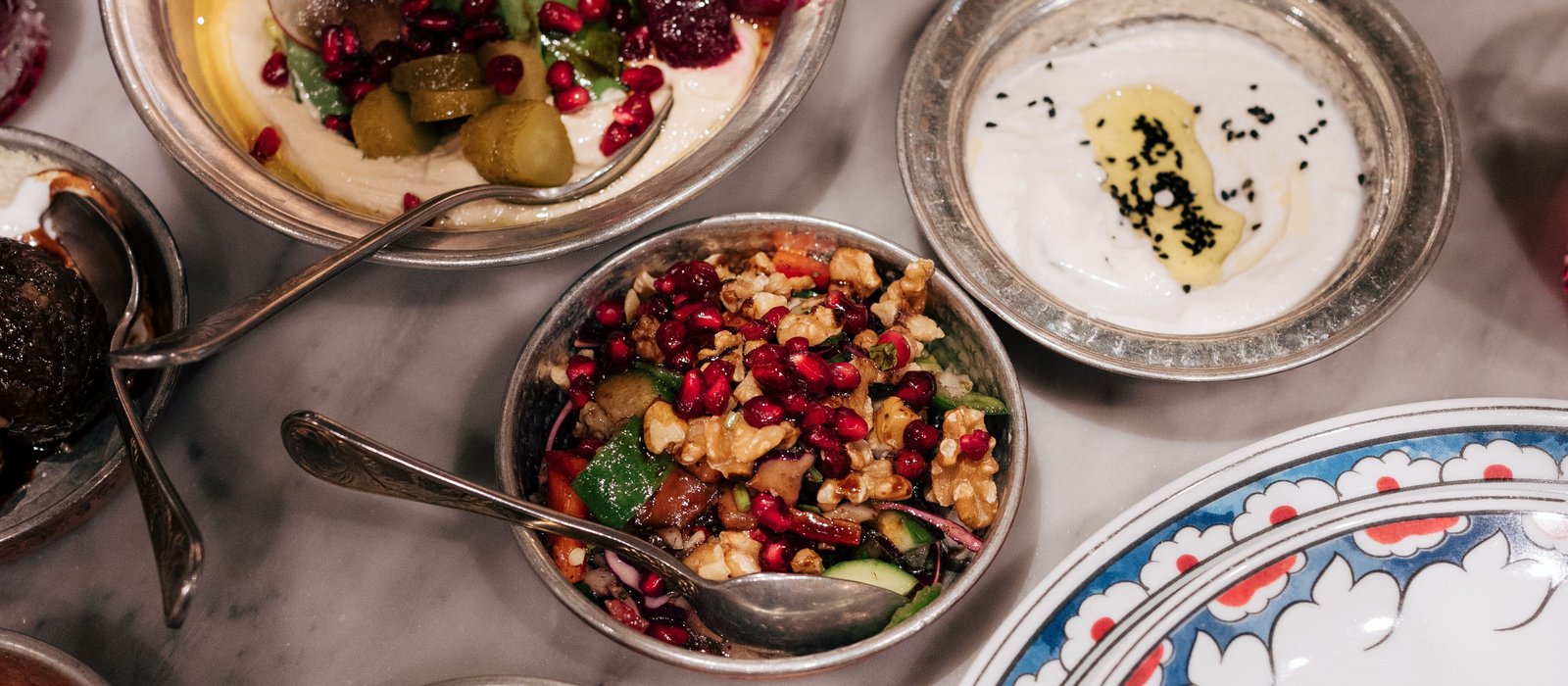
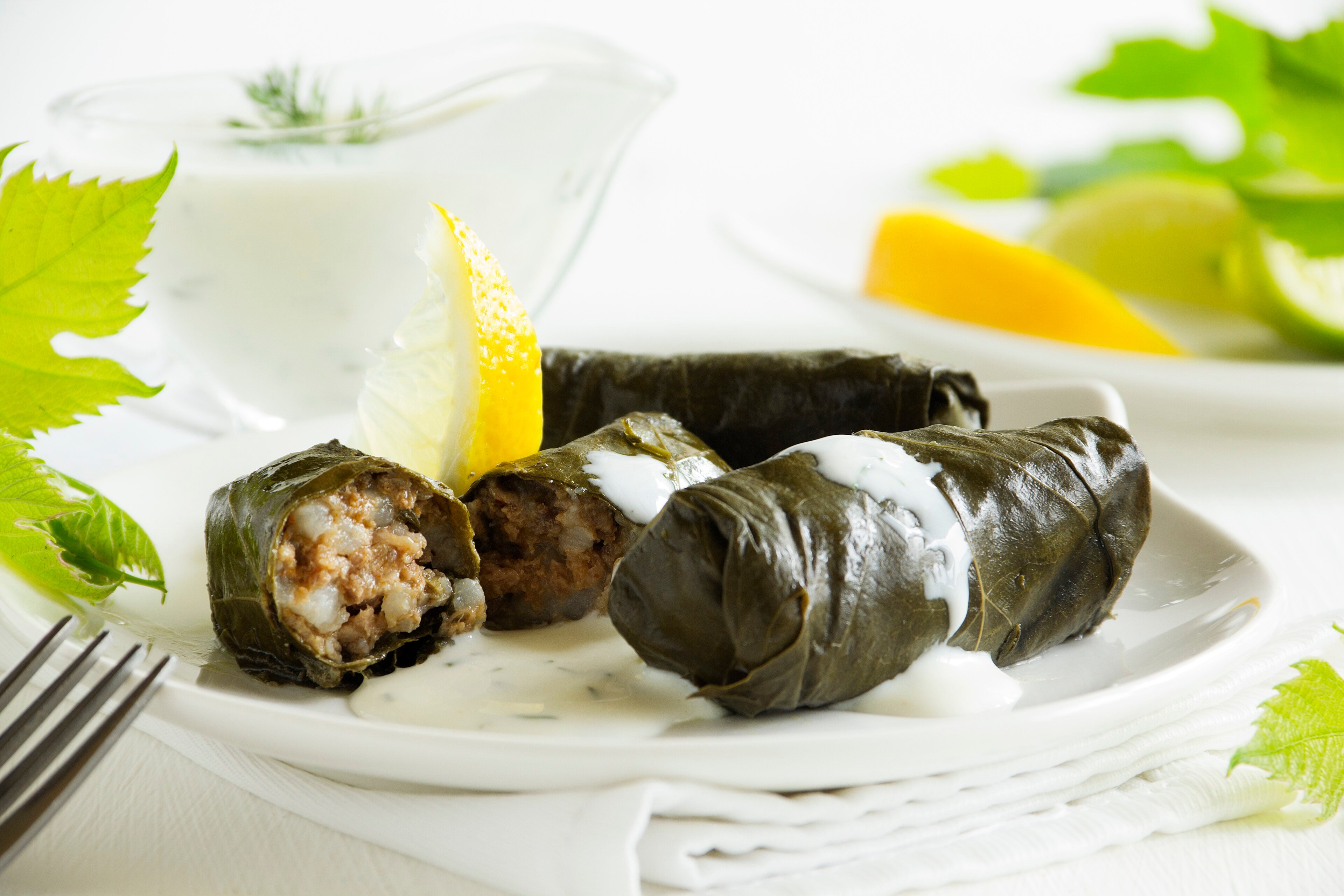
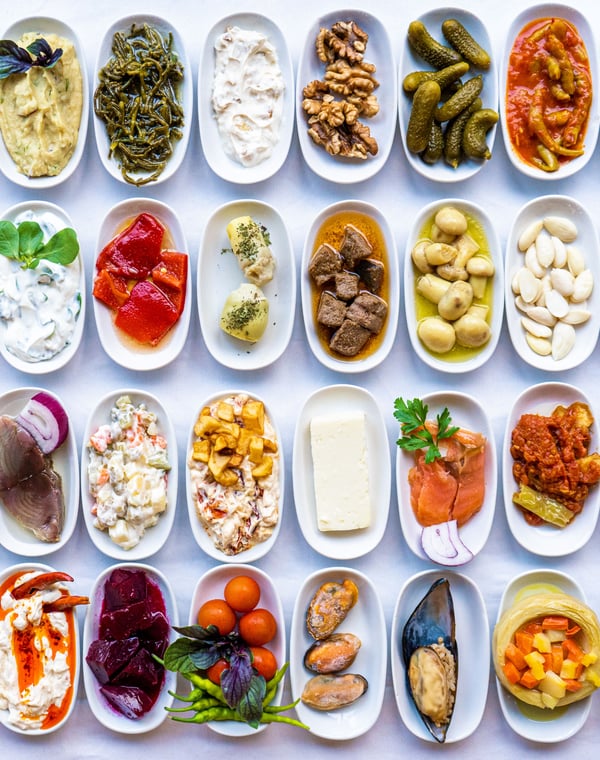
Two things make Turkey easy. First, meze culture: a huge share of the small-plate spread is naturally vegetarian — dips, salads, stuffed vegetables, beans, and pastries — so you can build a feast without meat. Second, the tradition of zeytinyağlı dishes ("with olive oil") — vegetables like green beans, artichokes, and stuffed grape leaves cooked in olive oil and served cold or warm — are a whole category of delicious vegetarian food. Add the legendary meat-free Turkish breakfast, and you're well covered.
The best vegetarian dishes
The range is wide enough that you can eat something different at every meal without repeating yourself. Below are the staples to look for on any menu — most are available across the country, from a big-city restaurant to a small-town lokanta, which is what makes meat-free travel here so easy.
Zeytinyağlı dishes — olive-oil vegetables like zeytinyağlı fasulye (green beans).
Menemen — soft eggs with tomato and peppers.
Gözleme — savory flatbread with cheese, spinach, or potato.
Pide — Turkish flatbread "pizza," available with cheese (peynirli) or egg.
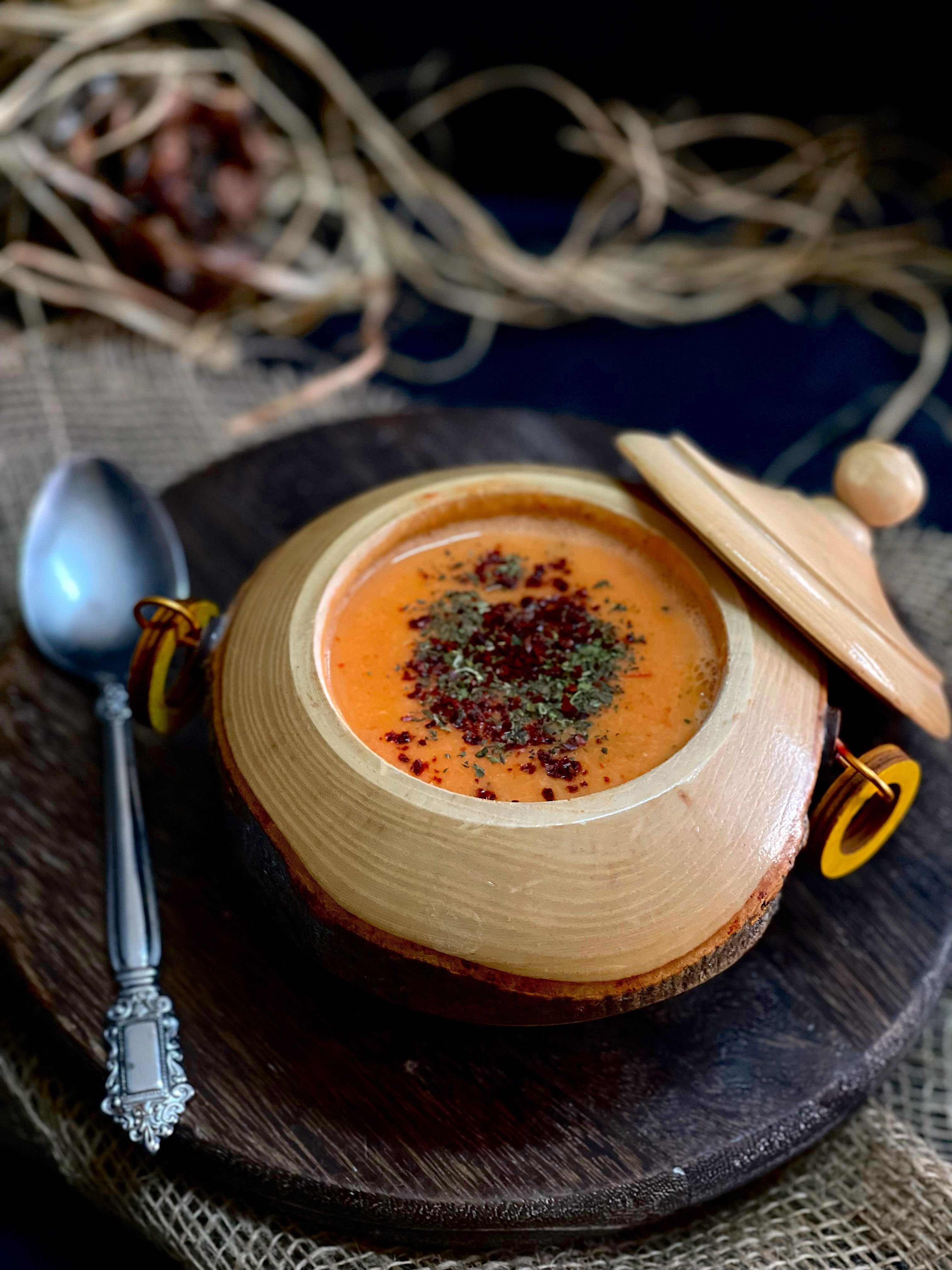
Mercimek çorbası — the ubiquitous red lentil soup (usually vegetarian, but ask).
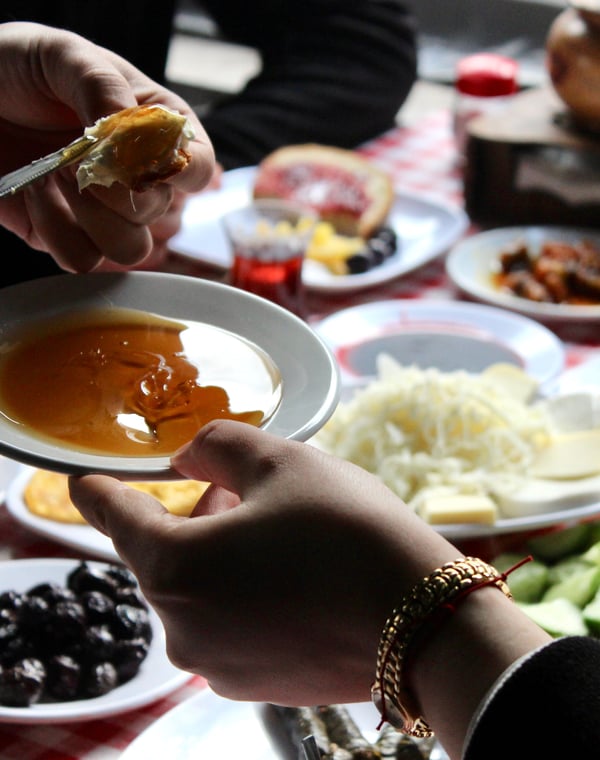
Turkish breakfast — a meat-free feast on its own.
Tips for vegans
Vegans need a bit more care, as dairy (yogurt, cheese, butter) and eggs are everywhere, but it's very doable. Lean on the zeytinyağlı olive-oil vegetable dishes (traditionally vegan), legume dishes, salads, and many meze. Watch for hidden butter or yogurt, and confirm that lentil soup is made without a meat or chicken base (it often is, but not always). Fresh fruit, bread, nuts, and the abundant produce markets make self-catering easy too.
Where vegetarians eat best (and where to be careful)
Geography shapes the vegetarian experience. Istanbul is the easiest place by far — dedicated vegetarian and vegan restaurants, international options, and menus where staff understand dietary requests. The Aegean coast, with its olive-oil-and-vegetable tradition, is naturally vegetarian-friendly. Where you'll work a little harder is in the kebab heartlands of the southeast and in small rural towns, where meat is more central and dedicated veggie spots are rare — but even there, the meze, lentil soup, pide, gözleme, and breakfast staples mean you'll never go hungry. The key is leaning on the naturally meat-free classics, which are available absolutely everywhere, rather than hunting for specifically "vegetarian" restaurants.
Useful phrases and tips
A few words go a long way. "Etsiz" means "without meat"; "Ben vejetaryenim" means "I am vegetarian"; and "Et yemiyorum" means "I don't eat meat." Be aware that some dishes use meat stock or small amounts of meat that may not be obvious, so it's worth asking. Bigger cities (Istanbul especially) have dedicated vegetarian and vegan restaurants, while in smaller and more conservative towns you'll rely on the naturally meat-free staples above — which are plentiful everywhere. For the full culinary picture, see our Turkish food guide, and note that the famous Turkish breakfast is a vegetarian highlight.
Self-catering and snacks
Between meals, vegetarians and vegans are spoiled in Turkey. The produce markets (pazar) overflow with fresh fruit, vegetables, olives, nuts, and dried fruit at tiny prices — perfect for assembling a picnic. Bakeries sell cheese-filled börek, simit, and savory rolls; street vendors offer roasted chestnuts, corn, and fresh juices. Turkish delight, halva, and baklava cover the sweet cravings (though check baklava isn't brushed with anything animal-derived if vegan). With a little market shopping, you can eat wonderfully well between sit-down meals, which is especially handy in smaller towns where restaurant options are thinner. The abundance and low prices make plant-based travel in Turkey not just doable but genuinely enjoyable.
FAQ
Is Turkey good for vegetarians?
Yes — very. Turkish cuisine has a deep tradition of meze, olive-oil vegetable dishes, legumes, and a meat-free breakfast, so vegetarians eat extremely well.
Can vegans eat well in Turkey?
Yes, with a little care. The zeytinyağlı (olive-oil vegetable) dishes are traditionally vegan, along with many legume dishes, salads, and meze — just watch for dairy and eggs.
How do I say "vegetarian" in Turkish?
"Ben vejetaryenim" (I am vegetarian), "etsiz" (without meat), or "et yemiyorum" (I don't eat meat). Ask about meat stock in soups and dishes.
What's a good vegetarian dish to start with?
A meze spread, the olive-oil green beans (zeytinyağlı fasulye), menemen eggs, or a meat-free Turkish breakfast.
Keep planning
Not sure how it all fits together?
Pick your trip length and we'll point you to the right day-by-day itinerary.