Turkey's rules on bringing your own medication in are published, specific and more permissive than travelers expect — but they are conditional, and the condition is paperwork. This is one of the few areas of Turkish entry policy where the official wording is clear enough to plan against directly.
Here is what the customs rules say, and what the categories mean for a US traveler carrying a normal prescription.
The basic rule
Medications for personal treatment listed in the relevant customs annex are permitted in reasonable quantities when accompanied by supporting documentation; certain controlled substances, narcotics and specific restricted pharmaceuticals may be prohibited or require prior authorisation, and food supplements and sports foods face additional restrictions when imported by post or cargo.
Three separate ideas are packed into that. Personal-use medication is allowed. It has to be documented. And a subset — the controlled families — sits under different, stricter treatment.
"Reasonable quantities" is defined by your trip
The permitted quantity is a reasonable amount for personal treatment, determined by the duration of the stay in Turkey.
That's a proportionality test rather than a pill count, and it's the sensible reading: enough for the trip, plus the ordinary margin anyone sane packs. What it doesn't accommodate is the American habit of travelling with a full 90-day supply for a ten-day holiday, which invites a conversation you don't want to have at a customs desk.
The document that does the work
A document — a report from a healthcare organisation, a doctor's report, or a prescription — stating that the passenger must use the medication during the travel or stay must be presented to customs.
The wording is worth reading closely, because it tells you what the document has to say rather than what form it has to take. It has to establish that this medication is yours and that you need it during this trip. A prescription label with your name on it does that. A bare pharmacy receipt doesn't, and a pill organiser with loose tablets and no packaging does the opposite.
Note also that this is the same document requirement whether or not anyone asks to see it. It's the condition attached to bringing the medication in, not a form to be filled at the border.
Keep it in the original packaging
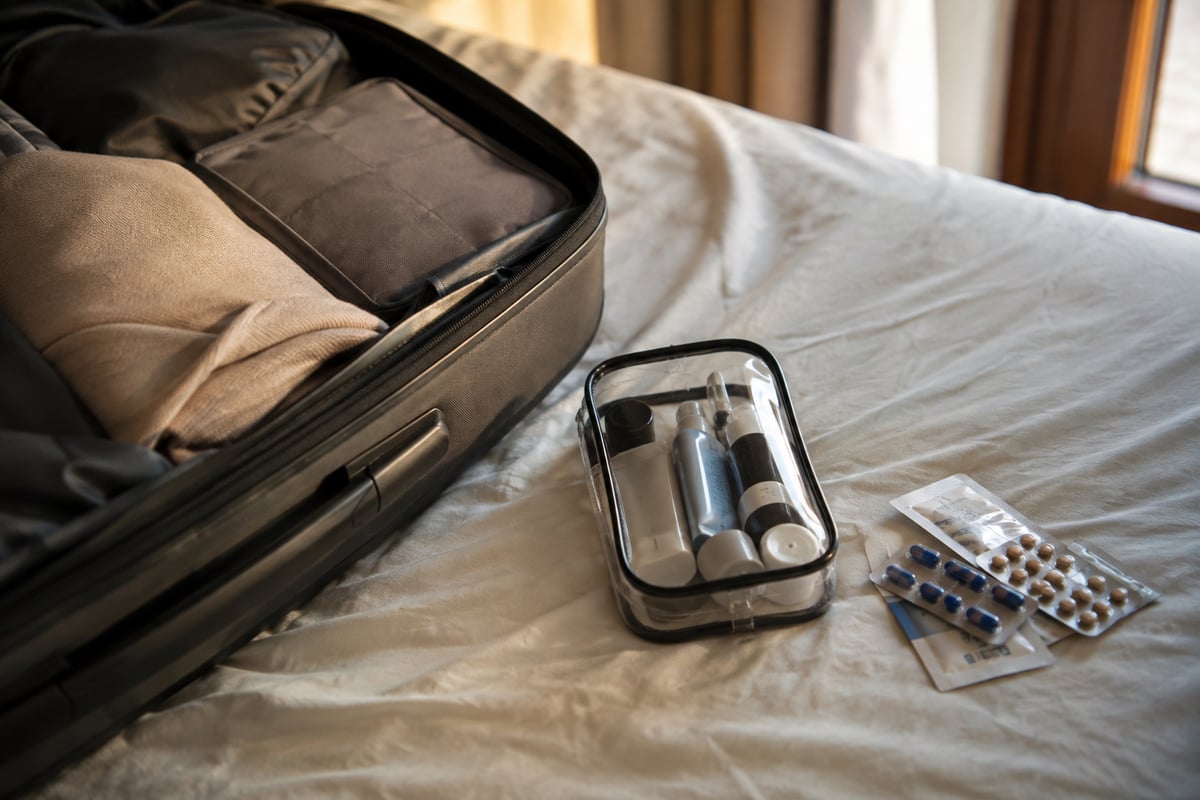
Original packaging carries the drug name, the dosage and, on a dispensed prescription, your name — which is most of what the rule asks for, printed on the box. Repackaging into an unlabelled organiser strips exactly the information that establishes the medication is legitimately yours.
The controlled families
The US prescriptions most likely to be restricted, controlled or unavailable in Turkey fall into the familiar controlled classes: narcotic pain medications such as oxycodone, hydrocodone and morphine; ADHD stimulants such as amphetamine and methylphenidate products; and benzodiazepines.
These are categories, not a banned list. Turkey's own controlled-substance scheduling is maintained by its medicines regulator and a specific product's status can differ from what the category suggests. What the categories tell you is where the extra documentation and possible prior authorisation apply — and where "I'll just buy more there" is least likely to work.
Two practical consequences for anyone in one of those families. Carry the prescribing paperwork rather than relying on the label alone. And treat the supply as non-replaceable in country, because a US prescription can't be filled at a Turkish pharmacy — replacing it means a Turkish doctor and a Turkish prescription.
Supplements, and things that don't feel like medication
The customs annex treats food supplements and sports nutrition products separately, with additional restrictions when they arrive by post or cargo rather than in a passenger's luggage. Large quantities of anything look like importation rather than personal use, and protein powders and bulk vitamins are the usual way a traveler crosses that line without noticing.
Checking a specific product
The rules above are the general frame. A specific drug's status in Turkey is a question for the Turkish medicines regulator or the nearest Turkish consulate, and it's worth resolving before departure rather than at the airport — particularly for anything in the controlled families, where the answer can involve prior authorisation and therefore lead time.
What you carry in, what you can replace locally, and what happens if you need treatment while you're there are three connected questions that most guides answer separately. Turkey, Worked Out puts them in one place.
FAQ
Can I bring my prescription medication into Turkey?
Yes, with documentation. Medications for personal treatment are permitted in reasonable quantities when accompanied by supporting documentation, while certain controlled substances may be prohibited or require prior authorisation.
How much can I bring?
A reasonable amount for personal treatment, judged by the length of your stay — a proportionality test rather than a fixed count.
What paperwork do I need?
A report from a healthcare organisation, a doctor's report, or a prescription stating that you must use the medication during your travel or stay, presented to customs. A labelled dispensed prescription generally does this.
Which medications are restricted?
The controlled classes: narcotic pain medications, ADHD stimulants and benzodiazepines. These are categories rather than a banned list — a specific product's status is a question for the Turkish medicines regulator or a consulate.
Can I put my pills in a daily organiser?
The rule asks for documentation establishing the medication is yours and needed for the trip, and original packaging carries the drug name, dosage and your name. An unlabelled organiser removes exactly that information.