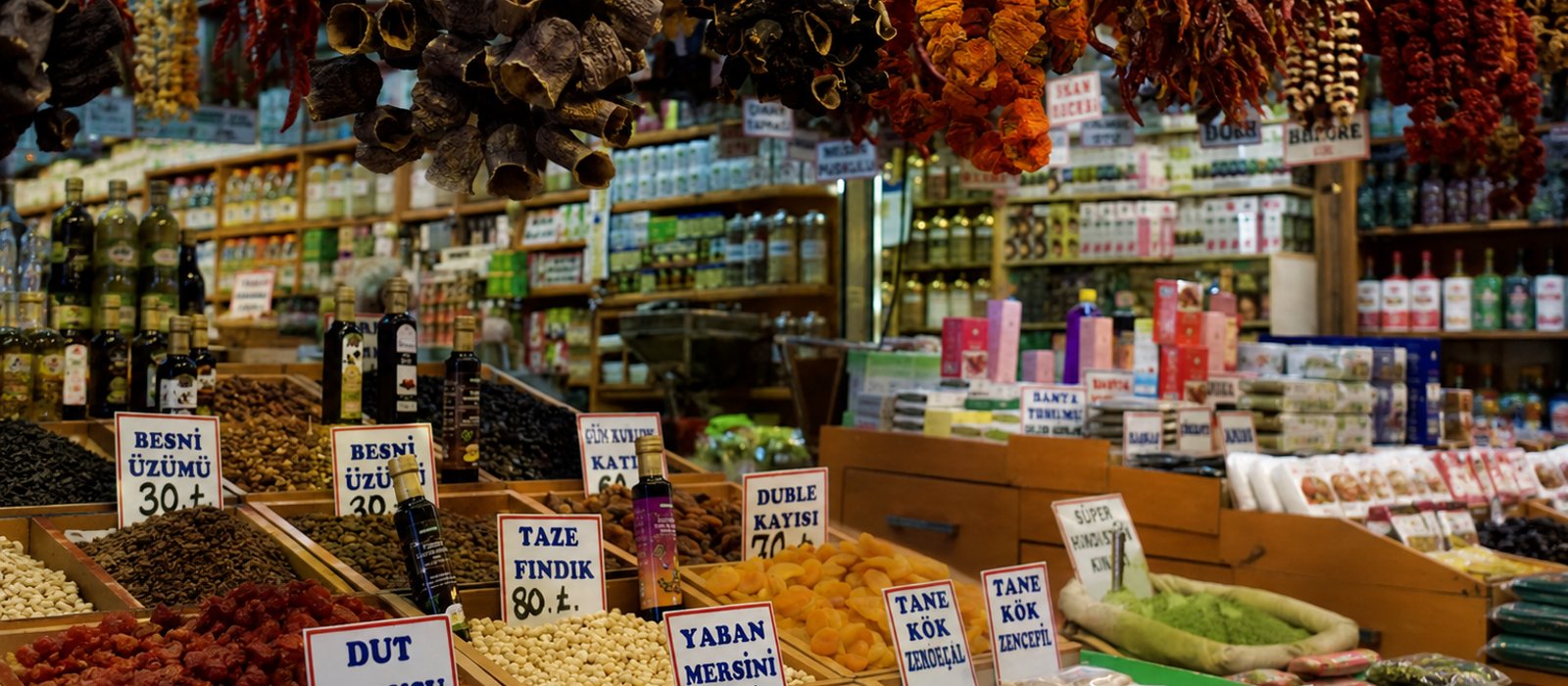
Americans arriving in Turkey encounter a price level that feels improbably low and a currency that behaves in a way most of them have never dealt with. Those two facts are the same fact, and understanding the mechanism explains several things that otherwise look like inconsistency or sharp practice.
The number
Turkey's consumer price index rose 32.11% year-on-year and 0.99% month-on-month in June 2026.
Sit with the first figure. Thirty-two per cent annual consumer inflation is not a statistical abstraction — it means the price of an ordinary basket of goods is roughly a third higher than it was twelve months earlier, in a country where the same basket was already repricing the year before that.
The monthly figure is the more useful one for a traveler, because it describes the pace at which a menu, a hotel rate or a museum ticket becomes out of date.
Why an old figure is a different kind of wrong
Every travel guide carries prices that age. In a low-inflation currency that ageing is slow and roughly uniform — a figure from three years ago is a bit low, and everything is a bit low together.
In this environment the ageing is fast and uneven. A figure from a guide written two years ago isn't slightly low; it may be off by half, and it isn't off by the same proportion as the figure next to it, because different goods reprice at different rates and different times.
That's the structural difference. An old price in a stable currency is an approximation. An old price here is closer to a historical artefact — it tells you what something cost then, and almost nothing about what it costs now.
What repricing looks like on the ground
How often businesses actually revise their prices isn't published, and no official statistic on retail repricing frequency exists. What can be said is what the inflation figures imply: at around one per cent a month in the June measurement, a printed menu is measurably stale within a season.
Which is why so much Turkish pricing is written rather than printed, and why a laminated menu with a sticker over the numbers is a normal sight rather than a suspicious one.
Prices in dollars and euros
Visitors notice that some things — tours, transfers, hotel rooms, balloon flights — are quoted in foreign currency while everything else is in lira. There's a legal framework behind that, and it's not the one people assume.
Under Turkey's currency protection regime, contracts between persons resident in Turkey for the sale of goods, services, real estate, vehicle hire and similar transactions may not be denominated or indexed in foreign currency except in cases the Ministry determines. Tourist-facing retail pricing in practice frequently displays dual figures, while the statutory rule requires lira denomination for domestic resident-to-resident contracts.
So foreign-currency pricing is regulated, and the restriction is aimed at contracts between residents. A transaction involving a visitor sits differently from one between two Turkish parties, which is why dual pricing appears where tourists are and largely doesn't where they aren't.
It also means a business quoting you in dollars isn't necessarily doing something irregular — but it is doing something the law has views about, in a framework built to defend the currency rather than to serve travelers.
What the exchange rate does to all this
The lira's movement against the dollar is published daily by the central bank and moves continuously. No figure appears in this article for that reason: any rate printed here would be wrong within days, and printing it would create exactly the false precision the rest of this piece is about.
What matters structurally is that a traveler is exposed to two moving quantities at once — domestic prices rising in lira, and the lira moving against the dollar. Those can offset each other, compound, or diverge, and the net effect on what a trip costs an American is not readable from either number alone.
That is genuinely unusual. In most destinations one of those two is close to still.
What holds steady
Not everything moves. The shape of Turkish spending is durable even when the numbers aren't: the relative cost of a domestic flight against an intercity bus, a neighbourhood lokanta against a tourist restaurant, a public ferry against a chartered boat. Those relationships persist across repricing in a way absolute figures don't.
Which is why the site's cost guidance is expressed as ranges and tiers rather than as fixed sums, and why a figure's age matters more than its precision.
Reading a trip budget against two moving quantities, and knowing which components hold their shape when the numbers don't, is exactly the reasoning these guides supply the parts for. Turkey, Worked Out assembles it.
FAQ
How high is inflation in Turkey?
Consumer prices rose 32.11% year-on-year and 0.99% month-on-month in June 2026. The monthly figure is the one that tells you how fast a printed price ages.
Why are some prices quoted in dollars or euros?
Turkey's currency protection regime bars foreign-currency denomination in contracts between residents except where the Ministry allows it, while tourist-facing retail commonly shows dual figures. The restriction targets resident-to-resident contracts.
Are old guidebook prices usable?
Less than in most countries, and differently. An old price in a stable currency is an approximation; here it can be off by half, and not by the same proportion as the figure beside it, because goods reprice at different rates and times.
Does a weak lira mean Turkey is cheap for me?
Not by itself. Two quantities move at once — domestic prices rising in lira, and the lira against the dollar. They can offset, compound or diverge, and the net effect isn't readable from either number alone.
What stays reliable?
The relationships rather than the amounts: a bus against a flight, a lokanta against a tourist restaurant, a public ferry against a charter. Those hold their shape across repricing in a way absolute figures don't.