Turkey's domestic flight network is genuinely good, and most first-trip itineraries lean on it. But the country also runs high-speed rail and one of the most extensive intercity coach networks anywhere, and on some corridors those aren't a fallback — they're the only service, or the faster one door to door.
Here's what actually runs, how long it takes, and which components a comparison has to include.
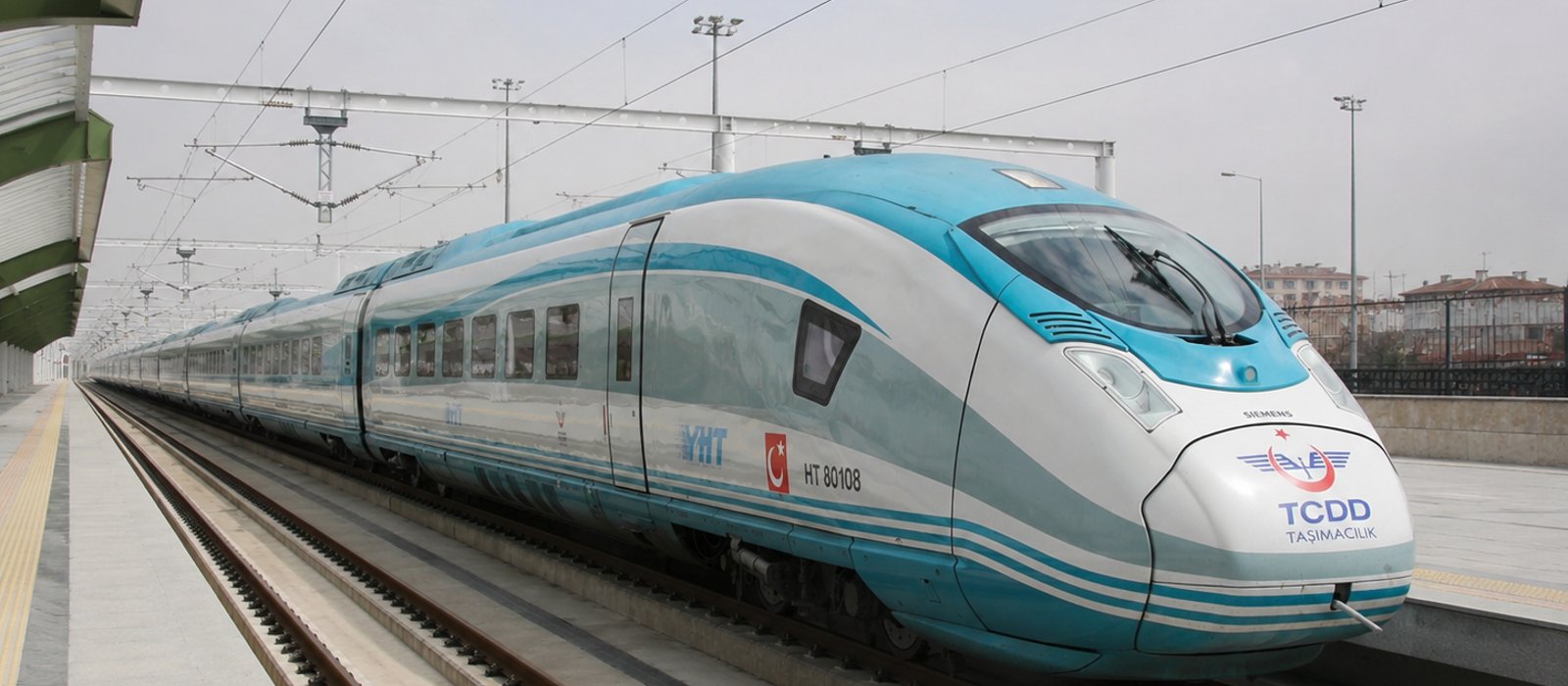
High-speed rail
The YHT high-speed network runs Ankara to Istanbul (around 4h30 to 5h to Söğütlüçeşme, roughly 5h to Halkalı), Ankara to Eskişehir in about 1h21 to 1h26, Ankara to Konya in about 1h49, Ankara to Karaman in about 2h49, and Istanbul to Konya in about 5h, with Istanbul to Karaman also operated.
The shape of that network is worth reading carefully, because it explains where rail is and isn't an option. It radiates from Ankara across the Anatolian plateau. It does not reach the Aegean or Mediterranean coasts, and it does not reach Cappadocia. For the classic first-trip triangle, rail covers one leg at most.
Buying a ticket
YHT tickets are sold online through the TCDD Taşımacılık website and app, with advance purchase possible, and foreign passports are accepted for online booking.
The passport field is the part travelers report friction with, and the official pages don't spell out exactly how foreign documents are handled — so it's worth treating online booking as usually workable rather than guaranteed, with station counters as the alternative.
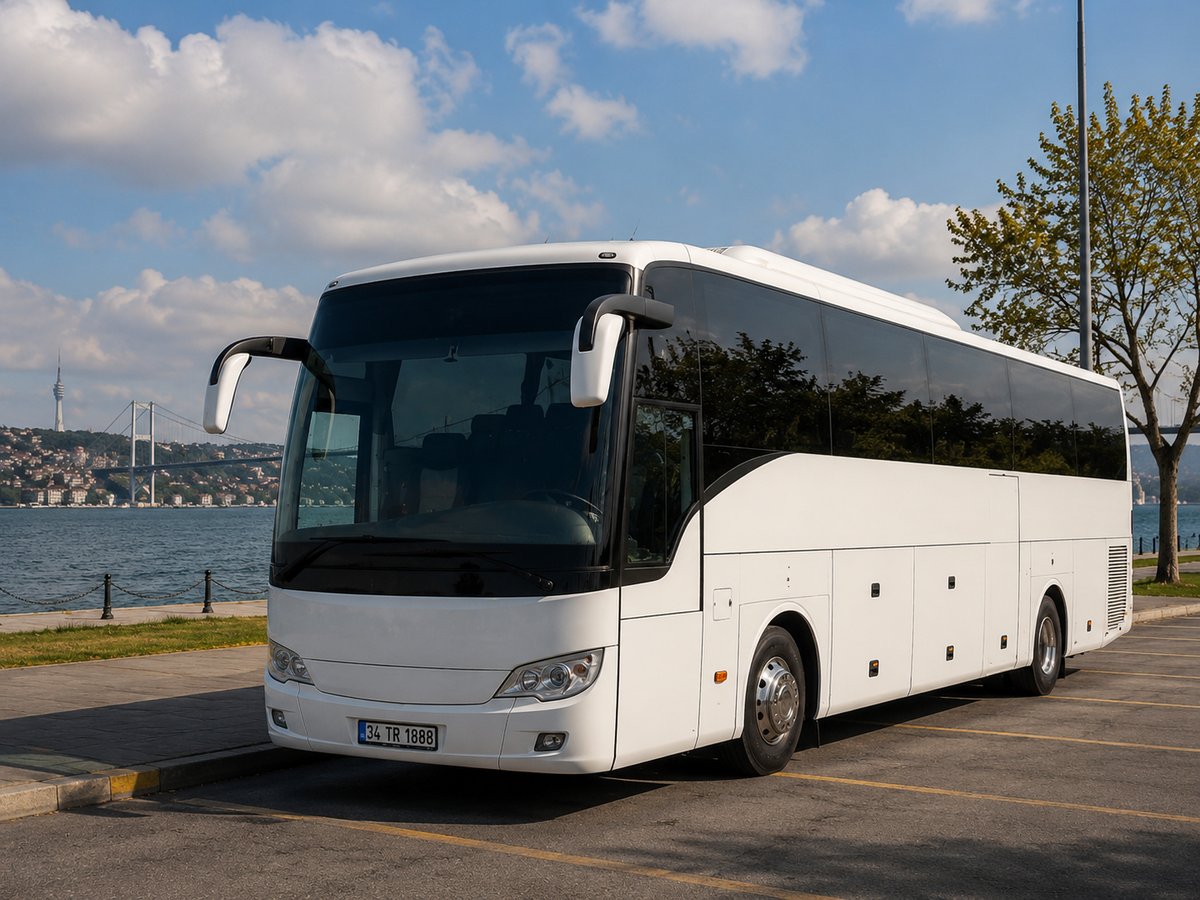
Intercity coaches
The coach network reaches virtually everywhere the train and the plane don't, which in Turkey is most places. Modern fleets, frequent departures, and overnight services on the long corridors.
Typical journey times run around 11 to 12 hours Istanbul to Cappadocia (usually overnight), 6 to 8 hours Istanbul to Izmir, and 6 to 7 hours Izmir to Antalya, varying by operator, route and traffic.
Those are approximations from route data rather than published operator timetables — no single official source lists them, and individual carriers vary. They're the right order of magnitude for planning, not a schedule.
What a fair comparison includes
The reason flying looks so dominant on paper is that people compare a 75-minute flight with an 11-hour coach. The flight's actual door-to-door figure has several components the flight time doesn't contain:
Getting to the airport — and in Istanbul that means one of two airports on opposite sides of the city.
Check-in and bag-drop cut-offs — which close before departure, not at it.
Security.
The walk to the gate, which at a terminal the size of IST is not trivial.
Reclaiming a bag at the other end.
Getting from the arrival airport into the city.
Rail and coach both arrive in or near city centres and neither has a security queue. Coach terminals sit outside the centre in most Turkish cities, so they carry a transfer of their own — but a shorter one.
The components are what differ; the arithmetic depends entirely on the specific pair of cities and where you're staying at each end.
Where there's no flight at all
Domestic aviation covers the major cities well, but the country is large and some pairs travelers want simply aren't connected directly — routing through Istanbul, which turns a short hop into a half-day. Cappadocia to the southern coast is the classic case, and it's a corridor where road transport is competitive rather than a compromise.
No official list of unserved corridors exists, so the reliable method is checking the specific pair rather than assuming a flight exists because both places have airports.
Choosing between these modes on a real itinerary means weighing them against an international return that's already fixed, which is a calculation none of these pages makes. Turkey, Worked Out makes it.
FAQ
Does Turkey have high-speed rail to the coast?
No. The YHT network radiates from Ankara — to Istanbul, Eskişehir, Konya and Karaman — and reaches neither the Aegean and Mediterranean coasts nor Cappadocia.
How long is the coach from Istanbul to Cappadocia?
Around 11 to 12 hours, usually overnight, varying by operator and traffic — an approximation from route data rather than a published timetable.
Can I book Turkish trains online with a US passport?
Tickets are sold through the TCDD Taşımacılık site and app and foreign passports are accepted, though the official pages don't detail how — station counters are the alternative if the form resists.
Is flying always faster in Turkey?
By flight time, usually. Door to door it depends on which components you count — airport access, check-in cut-offs, security, the walk to the gate, baggage and the trip into the city at the far end — against a train or coach arriving nearer the centre.
Are there routes with no flights?
Yes, and no official list of them exists. Some city pairs route through Istanbul rather than connecting directly, so it's worth checking the specific pair rather than assuming a flight exists because both places have airports.