Driving in Turkey is straightforward for an American in most respects — same side of the road, familiar signage conventions, good highways between the main regions. The parts that catch people out are the ones with numbers attached, and a fair amount of what circulates online is out of date.
Here are the rules as the Turkish authorities publish them, plus the two systems that quietly bill you afterwards.
Speed limits
For passenger cars: 50 km/h in built-up areas, 90 km/h on ordinary intercity roads, 110 km/h on dual carriageways, and 130 km/h on motorways, with some build-operate-transfer motorways posted at 140.
Two of those bands are worth noticing. There's a distinct dual-carriageway limit that sits between the intercity road and the motorway, which many summaries omit entirely — and the motorway limit is higher than the figure most English-language sources quote. The road type determines the limit, so the sign is what governs, not an assumption carried over from another country.
Alcohol
The limit is 0.50 promil for private-car drivers, and 0.20 promil for drivers of commercial vehicles and other non-private categories.
Note that the stricter category is 0.20, not zero — another figure widely reported wrongly. For a visitor in a rental car the 0.50 threshold applies, which is below the level most US states set and low enough that a single drink with a meal is a real calculation rather than a theoretical one.
Belts, phones and child seats
Seatbelts are mandatory for all occupants; mobile phone use while driving is prohibited except hands-free; and child restraints are required for children below a height and weight threshold, with the requirement varying by age and size.
The child-seat detail is the one to confirm directly with the rental company if it applies to you — the requirement is real, but the exact thresholds aren't published in a form that survives being quoted second-hand, and a rental child seat is an item to book rather than assume.
Tolls: the system that bills you later
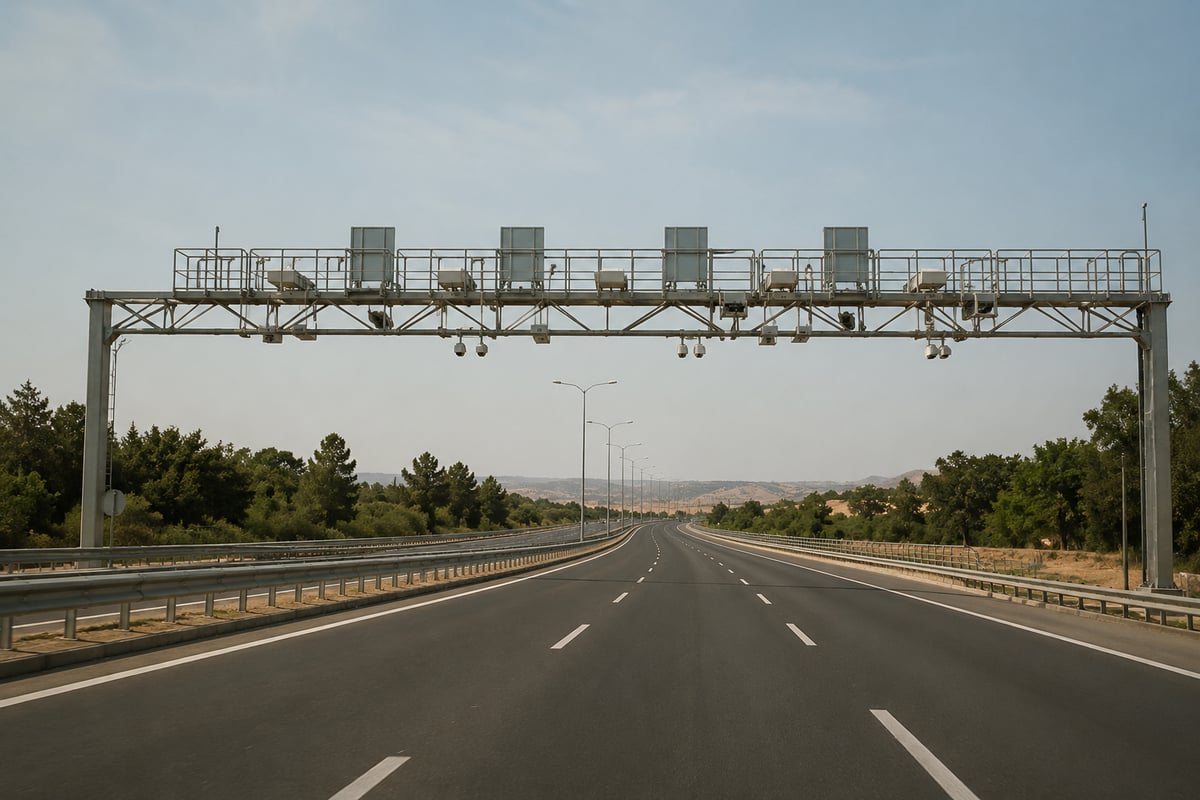
HGS — the Hızlı Geçiş Sistemi — is Turkey's electronic toll collection system for motorways and bridges. Vehicles carry an HGS sticker linked to a prepaid account, and the toll is deducted automatically as the vehicle passes the plaza.
There are no cash lanes to fall back on. A rental car is normally equipped with a transponder registered to the rental company, which means the tolls you incur are charged onward to you — not paid at the roadside and forgotten.
Where a pass goes unpaid — an insufficient balance, for instance — it becomes a violation passage: the registered owner is notified and must pay the toll plus an administrative charge, with the charge escalating if it goes unsettled.
The grace period and the surcharge aren't published in a form worth quoting, so the honest statement is the mechanism rather than a figure. What matters for a renter is the chain: the notice goes to the registered owner, which is the rental company, which then comes to you.
Fines: the same chain, longer
A traffic or parking fine incurred in a rental car is issued to the vehicle's registered owner — the rental company — which identifies the renter from the rental agreement and passes the fine on, typically adding an administrative fee.
Three consequences follow from that chain, and none of them is obvious at the time.
The delay can be long. A speed camera in Turkey doesn't stop you, and the first you hear of it may be a charge appearing weeks after you've flown home. The administrative fee is the rental company's own, on top of the fine itself. And because the charge arrives after the rental has ended, it lands on whatever card the company holds — which is why the deposit and the card details outlive the trip.
Helmets
Helmets are mandatory for motorcycle and scooter riders and their passengers on all roads. The licence question for two-wheelers is a separate and considerably less settled matter, covered in scooters and ATVs in Turkey.
What the rules don't tell you
Everything above is the published position. What sits alongside it — and what the corpus of Turkish driving advice mostly consists of — is the character of the driving itself: assertive in cities, patient on the coast roads, and unforgiving in Istanbul traffic at any hour.
That's real, and it's also not a rule. The rules are the numbers; the driving is the conditions.
How those numbers interact with a rental contract you didn't write and an insurance policy with its own conditions is the calculation none of these guides makes alone. Turkey, Worked Out makes it.
FAQ
What are the speed limits in Turkey?
50 in built-up areas, 90 on ordinary intercity roads, 110 on dual carriageways, 130 on motorways, with some concession motorways at 140. The dual-carriageway band is the one most summaries omit.
What's the drink-driving limit?
0.50 promil for private cars; 0.20 for commercial and other non-private drivers — the stricter figure is 0.20, not zero, contrary to what's widely reported.
How do tolls work in a rental car?
Electronically, through the HGS system, with a sticker linked to a prepaid account and no cash lanes. The rental car's transponder is registered to the company, which bills the tolls on to you.
What happens if I get a speeding ticket?
It's issued to the registered owner, the rental company identifies you from the agreement and passes it on, usually with an administrative fee added. It can arrive weeks after you've left.
Are helmets required?
Yes, for riders and passengers on all roads. Whether your licence covers the machine is a separate question with a much less settled answer.